
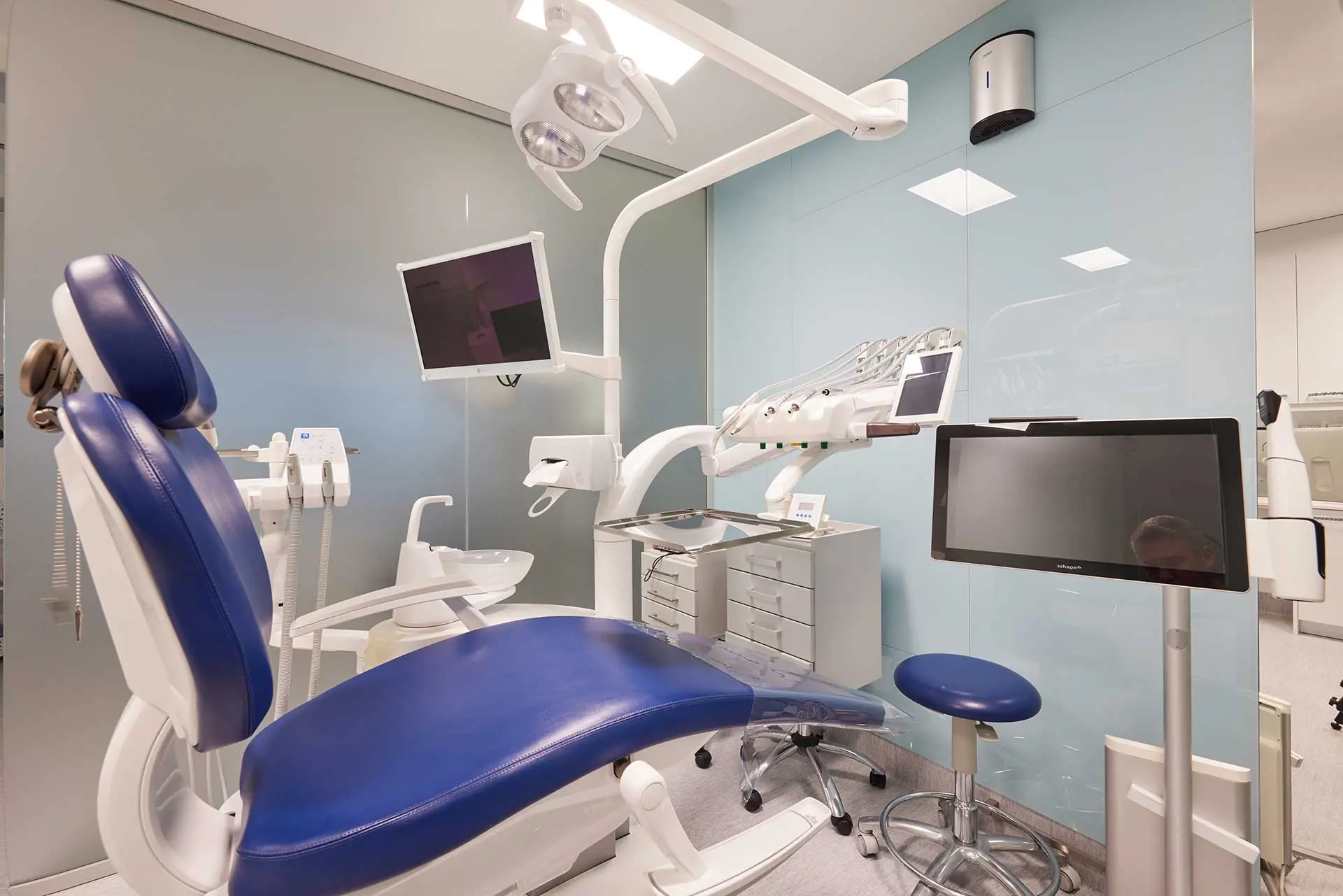
No pain, no stress
Pain-free dental treatment
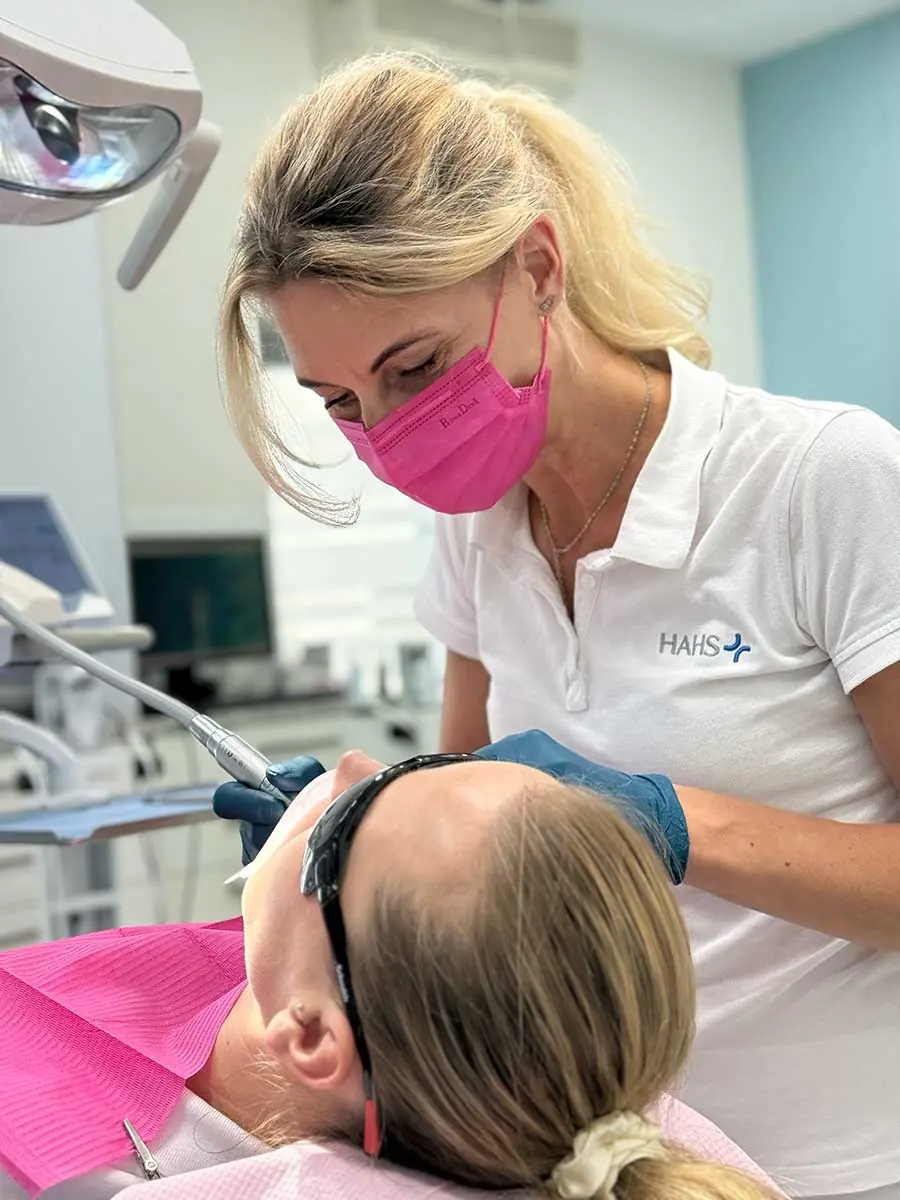
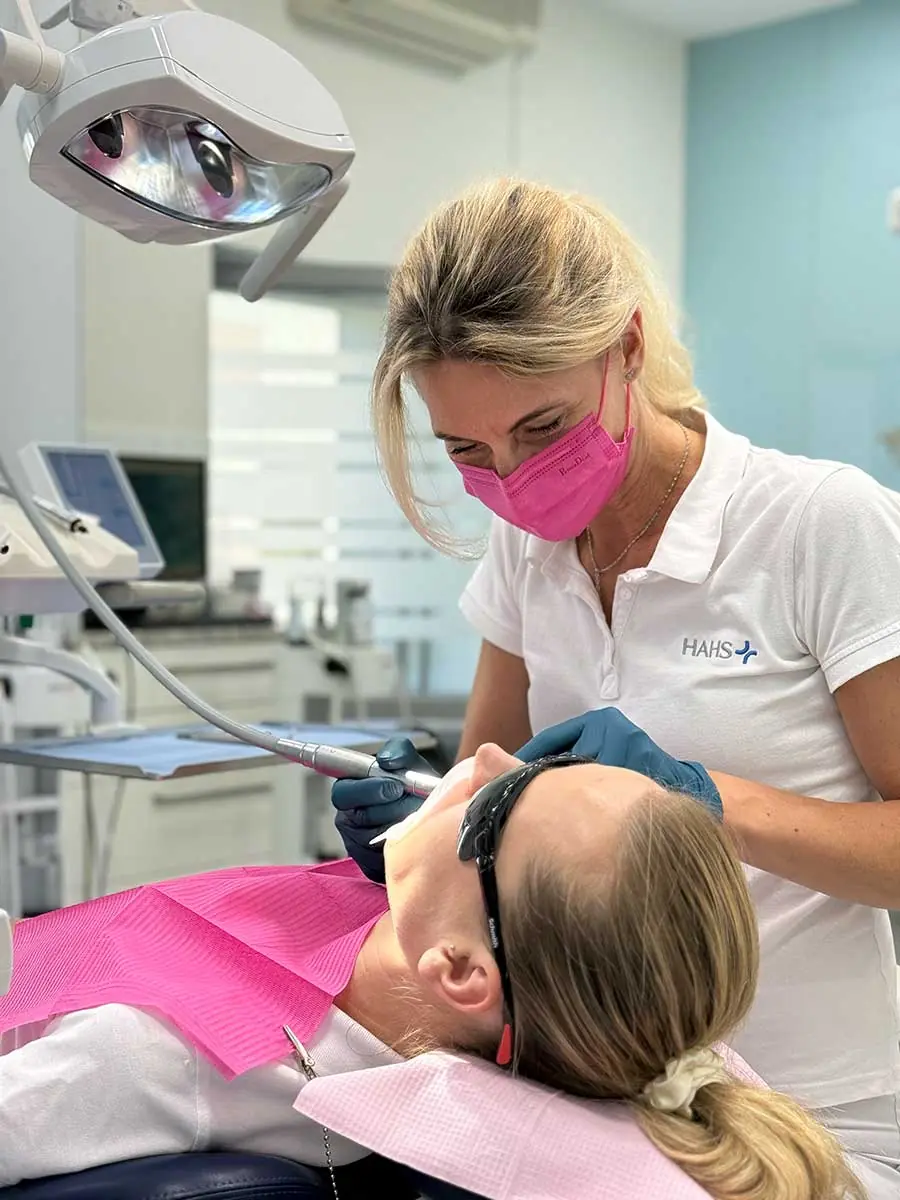
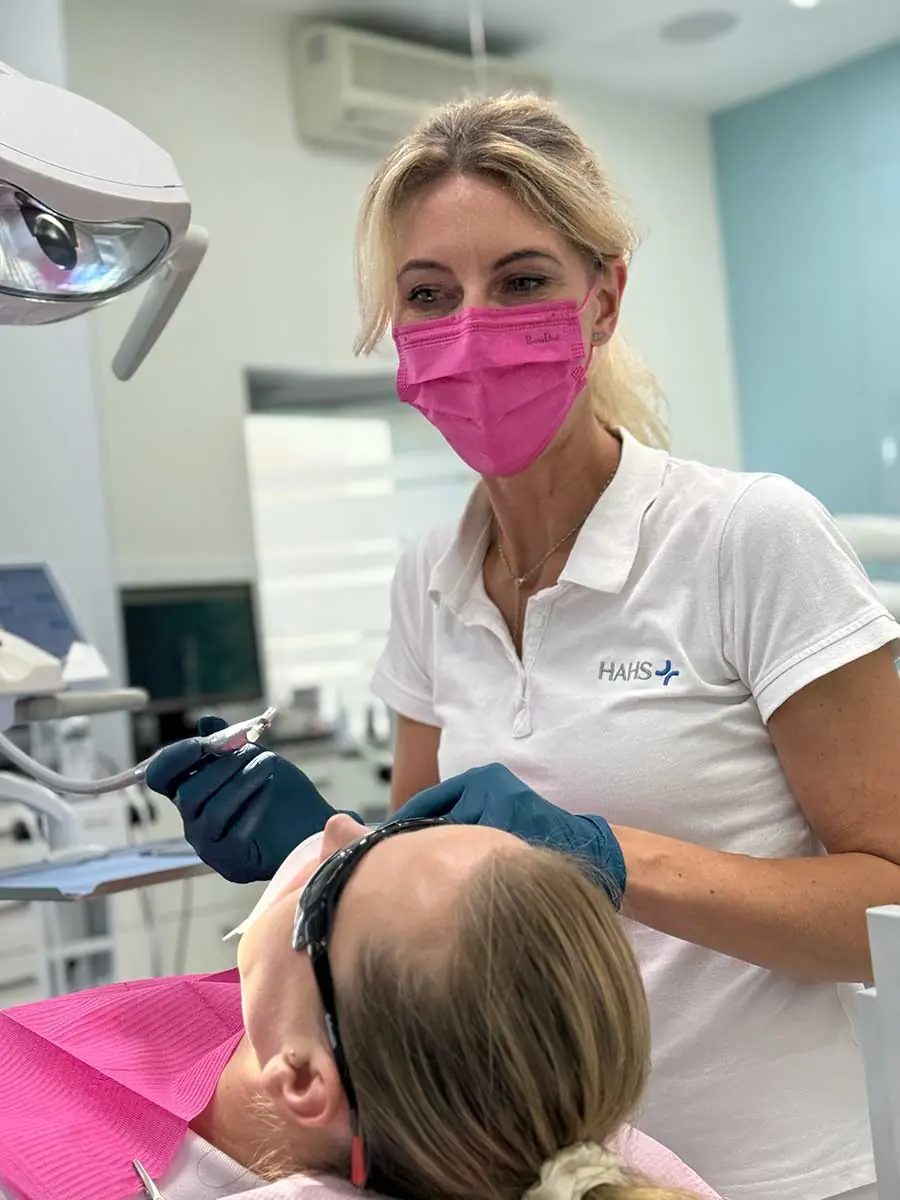
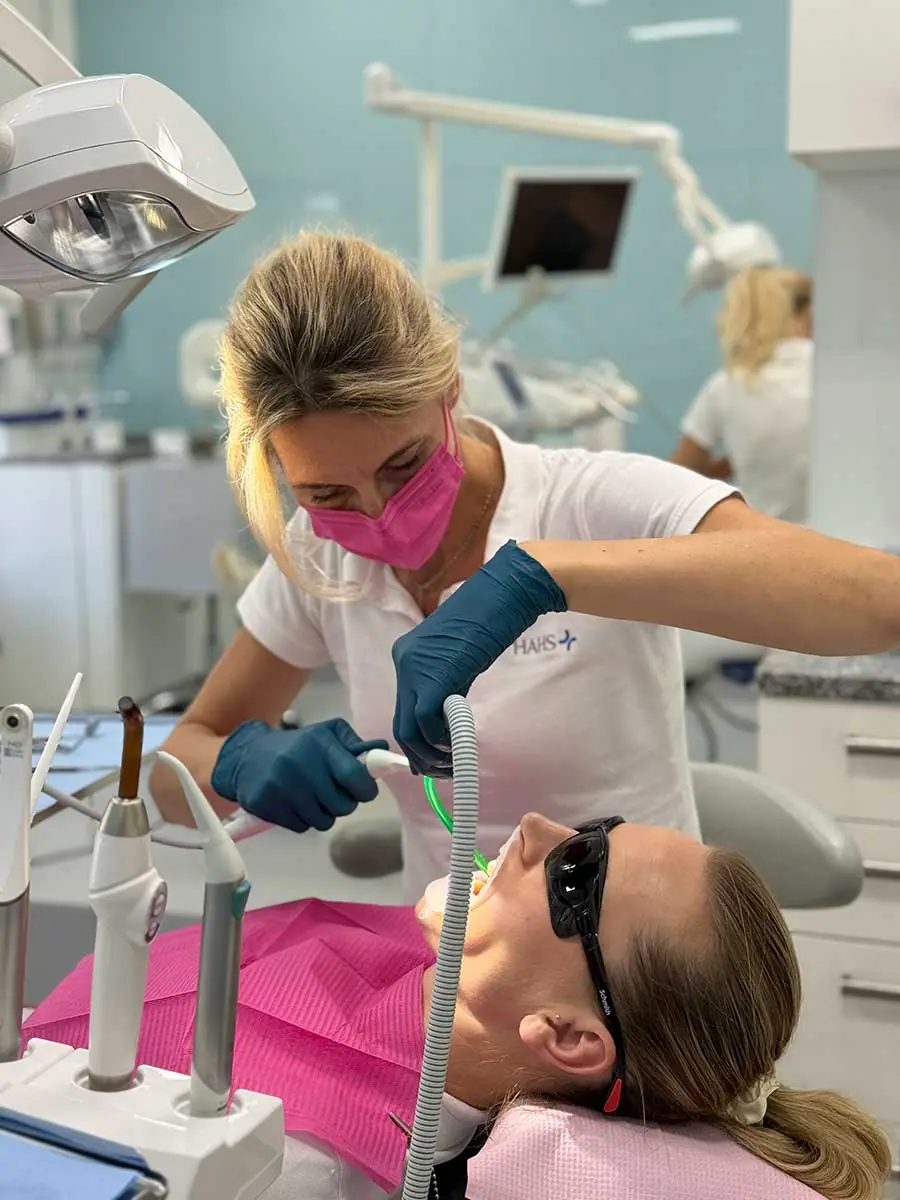
Patient comfort is the priority at every visit - treatment without stress and as short as possible.
Who it is for
Stress-free treatment that is as short as possible
Modern dentistry has many methods that ensure the patient's comfort during treatment. Depending on the type of procedure and your needs, we choose a suitable form of anaesthesia or support. We have solutions for people who:
- are very afraid of the dentist or, because of this, avoid even an annual check-up,
- find the sounds of the equipment used during treatment, such as the drill, hard to bear,
- need to have wisdom teeth removed or are planning complex surgical procedures, such as placing implants or restoring bone,
- are afraid of the pain of the anaesthetic injection or have found that local anaesthesia does not work for them.
Anaesthesia
The Wand - gentle anaesthesia
A traditional injection can be painful at the moment it is given, and it heightens fear of the dentist. For local anaesthesia we use a computer-controlled device, The Wand, which allows the anaesthetic to be applied gently.
The optimal method of delivery means the anaesthetic starts working immediately and a smaller amount of the preparation is needed, which makes the whole process safer. For particularly sensitive patients we also offer numbing of the injection site with a special spray.
Sedation and general anaesthesia
Treatment you can sleep through
Many people, afraid of pain, avoid the dentist for years. For patients who would like to sleep through their treatment, we offer sedation or full general anaesthesia.
- Sedation - the administration of a sedative that puts the patient in a half-asleep state, so that they feel no pain during the procedure.
- General anaesthesia - the patient's awareness and their ability to feel pain are completely switched off.
We choose the form of anaesthesia to suit the type of procedure and the patient's state of health. This option can also be helpful for complex surgical procedures, such as implant treatment or jaw bone restoration.
Care before and after the procedure
Safety under constant supervision
We provide comprehensive care for patients at every visit, including during general anaesthesia. They are looked after not only by dentists but also by experienced anaesthetists, nurses and a team of dental assistants.
Before the procedure we discuss the risks associated with it, answer your questions and assess your state of health. The anaesthesia team analyses the results of diagnostic tests (including blood tests and an ECG), and we also measure blood pressure. During the procedure, vital signs are continuously monitored with monitoring equipment.
After the procedure, patients wake up in a specially adapted room, where they remain under medical care for approx. 24 hours. We also offer overnight accommodation for companions and carers; a lounge is also available to guests.
Planning the procedure
Minimally invasive treatment, shorter anaesthesia
Proper treatment requires appropriate diagnostics and careful planning. As a result, procedures such as tooth extraction, especially of wisdom teeth or impacted teeth, do not have to be unpleasant.
We often plan complex treatment on the basis of 3D diagnostics (digital CT scans). The three-dimensional image on the computer screen allows us to analyse in detail the position, orientation and size of the tooth and to choose the optimal technique for the procedure, so that the surgeon can then work in a minimally invasive and precise way. The preparations take almost as long as the procedure itself, but they spare the patient pain and shorten the healing process.
You can read more about the methods we use on our page about diagnostics at HAHS Dental Clinic.
Next step
Book a consultation - we will plan your first visit with care.
A conversation, thorough diagnostics and a treatment plan. No rush, no pressure.