
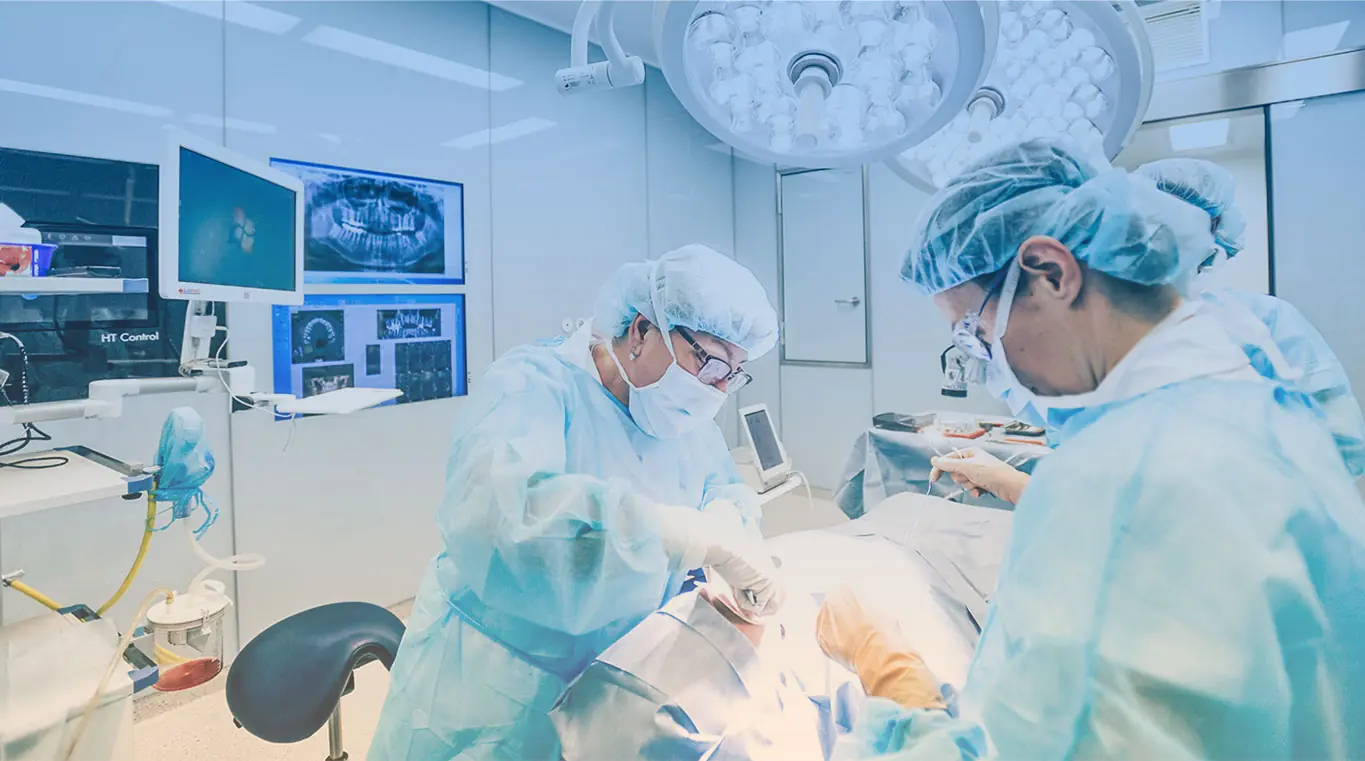
Implantology
Dental implants: a permanent root for a missing tooth
A titanium fixture that replaces the tooth root and becomes the foundation for a crown, a bridge or the restoration of an entire arch.
What is an implant
An artificial tooth root in the bone
An implant is a titanium screw that replaces the tooth root and to which a crown is attached. Titanium allows the fixture to fuse quickly with the bone, creating a natural and very stable base for the future tooth.
-
01
Crown
The visible part, which recreates the shape and colour of a natural tooth.
-
02
Abutment
The intermediate element that connects the crown to the fixture placed in the bone.
-
03
Titanium fixture
The screw that replaces the tooth root - it fuses permanently with the bone (osseointegration).
Why implants
Implants are a worthwhile investment in yourself, one that will pay off for the rest of your life.
30+
years worldwide
Implants from Nobel Biocare, the company we work with, have been used successfully for more than thirty years and are continually refined on the basis of long-term scientific research.
Everyday comfort
Eating and speaking without restrictions - no more of the discomfort typical of conventional dentures.
Protection of bone and teeth
They prevent the gradual loss of jaw bone and the loss of neighbouring teeth.
Aesthetics and function
They imitate natural teeth perfectly and provide stable support for crowns, dentures and bridges.
A better quality of life
It is not only health that improves, but also the patient's self-confidence and everyday comfort.
The treatment process
From placement to integration with the bone
-
01
Diagnostics and planning
A three-dimensional CT scan makes it possible to assess the quantity and quality of the bone and to plan the exact position of the fixture.
-
02
Placement
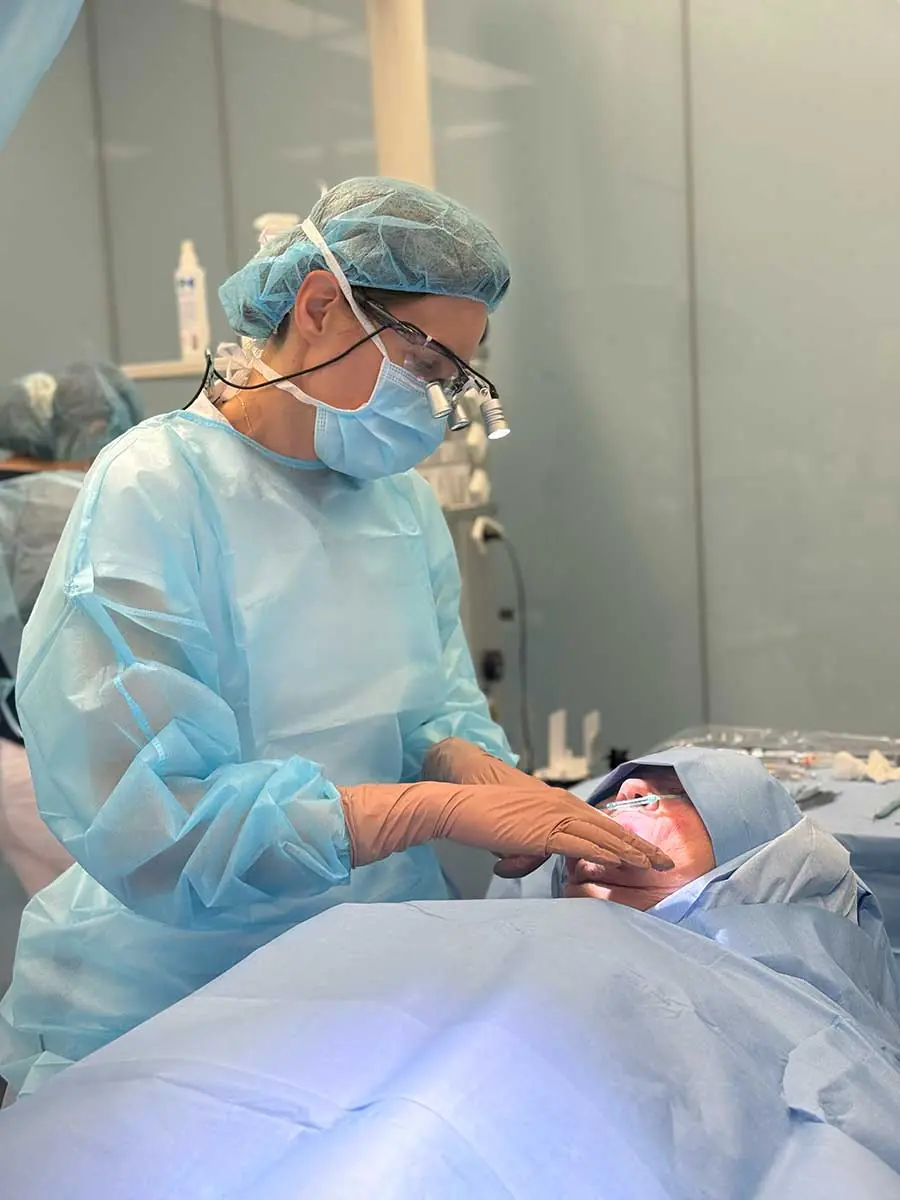
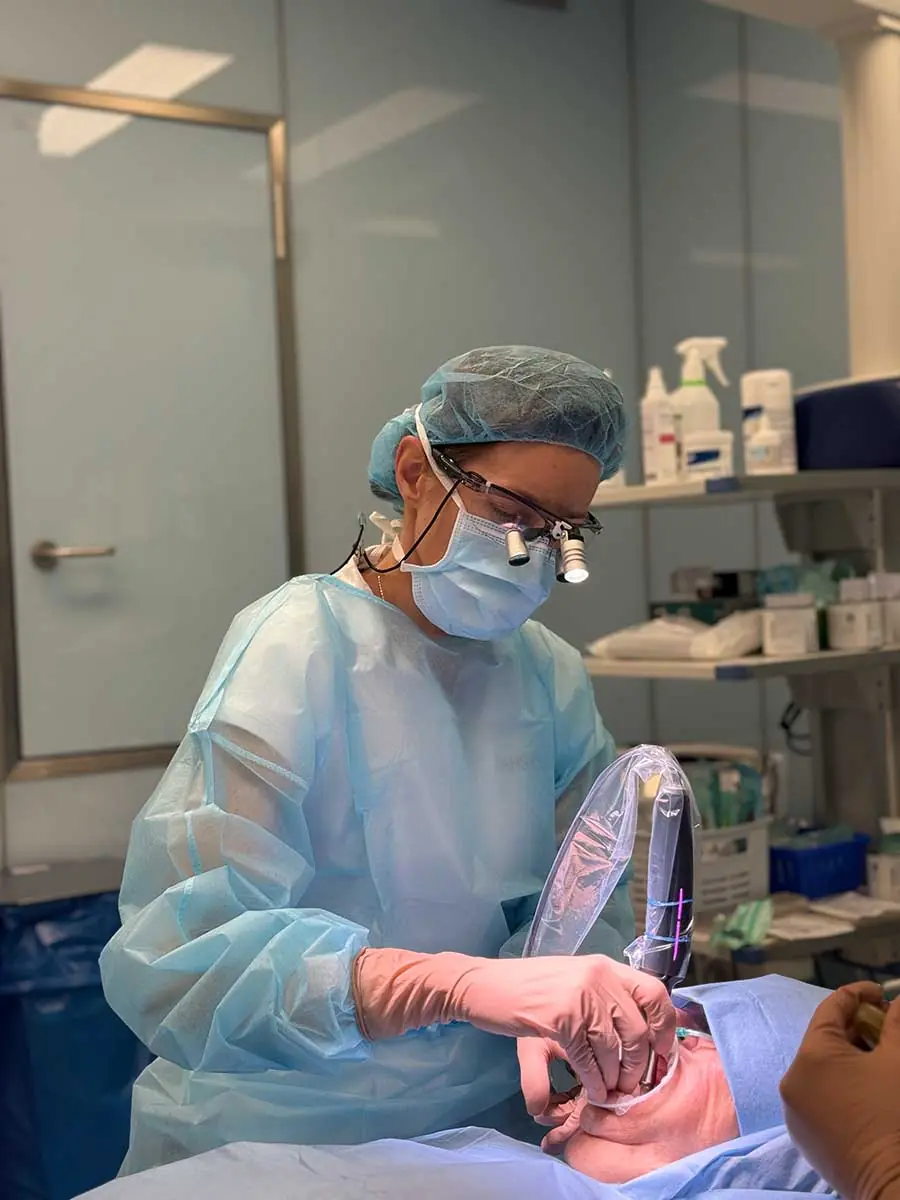
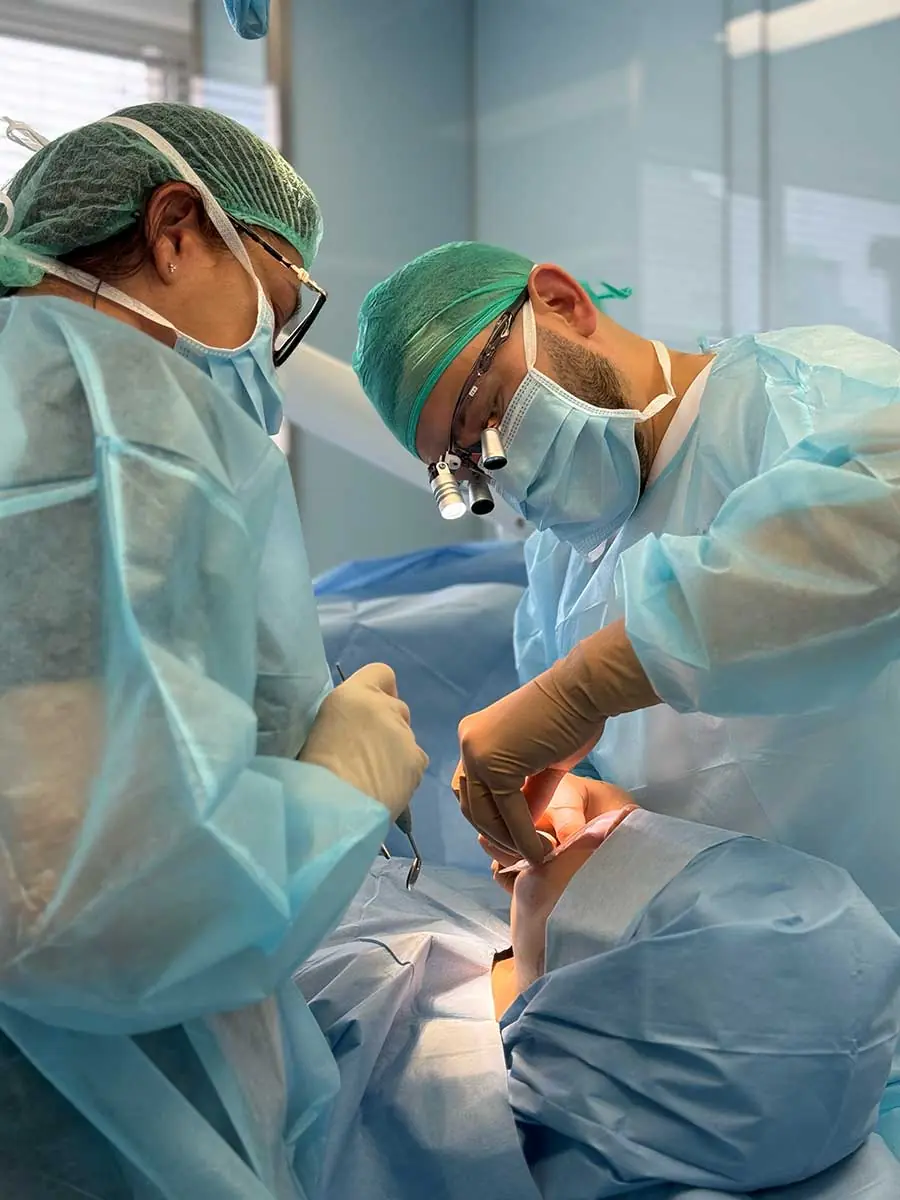
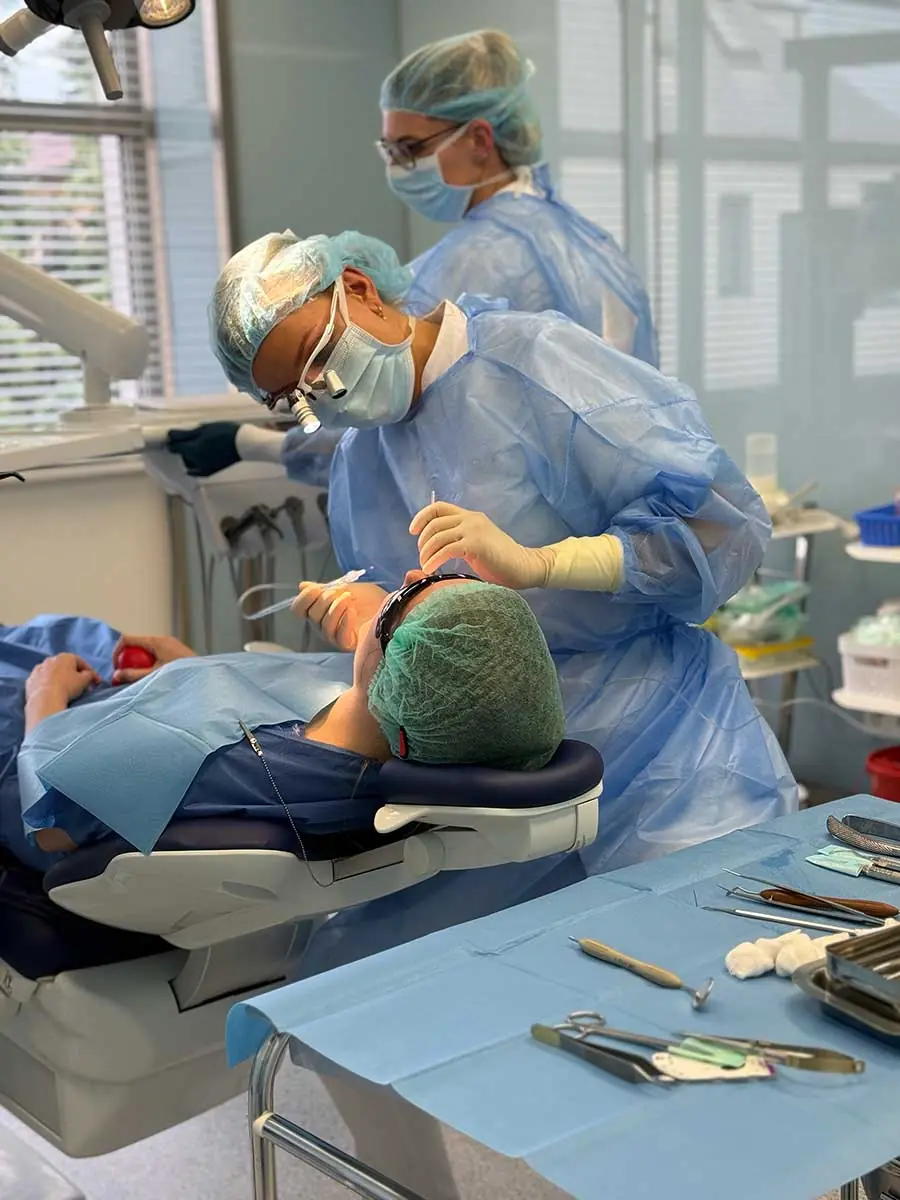
The implant is placed in the bone where the tooth was lost - the procedure is performed under local anaesthesia.
-
03
Healing
During the healing period (osseointegration) the titanium fuses permanently with the bone. The process usually takes from 3 to 6 months.
-
04
Restoration
Once the implant has integrated, we fit the final crown, bridge or denture - restoring the function and aesthetics of the teeth.
Indications
When to consider an implant
Implant treatment is indicated for practically all kinds of tooth loss: to replace single teeth as well as several missing teeth, and for complete toothlessness. Examples of use:
- loss of front teeth as a result of an accident,
- loss of front teeth when the neighbouring teeth are healthy,
- teeth remaining on only one side of the jaw (so-called residual unilateral dentition),
- loss of teeth at the back of the mouth,
- a hereditary condition in which the tooth buds are absent,
- advanced periodontal disease that does not respond to treatment - sometimes it is better to remove the “last” teeth with a poor prognosis and place implants before the teeth fall out.
Advantages
What you gain compared with a denture
Implants eliminate many of the inconveniences of traditional prosthetic treatment:
- they let you do away with dentures that fall out and with unsightly metal clasps,
- they do not require grinding down the neighbouring healthy teeth,
- the look and comfort of use are close to those of natural teeth,
- they restore the ability to chew and bite, and also let you speak and laugh without embarrassment,
- they strengthen and stabilise the neighbouring teeth, preventing their loss,
- they make it possible to fix dentures permanently in place,
- the procedure is safe, and the discomfort afterwards is no greater than after a tooth extraction.
The procedure is described on our page stages of implant treatment, and the available systems and techniques on our page implant solutions. Where there is not enough bone, jaw bone restoration can help, and we assess the conditions during diagnostics.
Clinical situations
The most common reasons for implants
Next step
Implant consultation with 3D diagnostics
A conversation, thorough diagnostics and a treatment plan. No rush, no pressure.