Implants · Complete toothlessness

Implants for complete toothlessness: restoring the arch

Fixed or removable restorations supported by implants - instead of a denture resting solely on the gum.

About the treatment

A fixed restoration instead of a removable denture

Replacing all the teeth in one jaw can be done in two basic ways. You can choose a prosthetic solution or opt for implant placement. A full denture does the job in many cases, but over time the jaw bone shrinks. As a result the denture stops fitting well and can even become a real nuisance.

Today many patients decide against a denture, above all for psychological and social reasons. This group is growing every day. They increasingly value the feeling of having their own teeth back, which brings a completely new quality of life.

For toothless patients, our clinic offers a number of ways of replacing missing teeth with implants. Some of them are presented below. You will find a comparison with a conventional denture in our section prosthetics for complete toothlessness.

Two ways to restore

Removable or fixed

I

Removable dentures supported on several implants

When the upper or lower jaw is toothless, keeping complete dentures in place is particularly important. Conventional prosthetic solutions do not stabilise them satisfactorily.

These difficulties can be overcome by using prosthetic restorations supported on several implants. This type of denture (overdenture) is connected to the implants by means of snap attachments or bars that hold it in place. Using from 2 to 4 implants significantly increases the comfort of wearing dentures.
II

Fixed dentures supported on several implants

The most secure way of holding dentures in place is to fix them permanently on implants. In the lower jaw this is usually 6 implants, and in the upper jaw 8.

The function and aesthetics of dentures fixed in this way give the patient an almost perfect feeling of having the lost teeth back. No other prosthetic solution meets these two criteria to such a high degree. Where the bone conditions of the jaw are particularly favourable, only 4 implants are enough to fix the denture permanently.

The dentist decides during the consultation whether the All-on-4 System can be used for a particular patient. This requires an examination and a detailed analysis of three-dimensional x-ray images (CT scans) - see diagnostics.

We also offer

In cases of significant bone loss

Zygoma Branemark

A solution used where there is only a small amount of bone at the back of the upper jaw.

Pterygoid implants

A specialist type of implant used at the back of the upper jaw, serving as stable anchorage for bridges and All-on-X restorations. They make it possible to avoid complex bone restoration procedures such as a sinus lift, and allow a fixed restoration even in patients with very severe bone loss.

There are also many other ways of replacing missing teeth with implants. Where bone has been lost, jaw bone restoration is also possible; we describe the course of treatment in the stages of implant treatment.

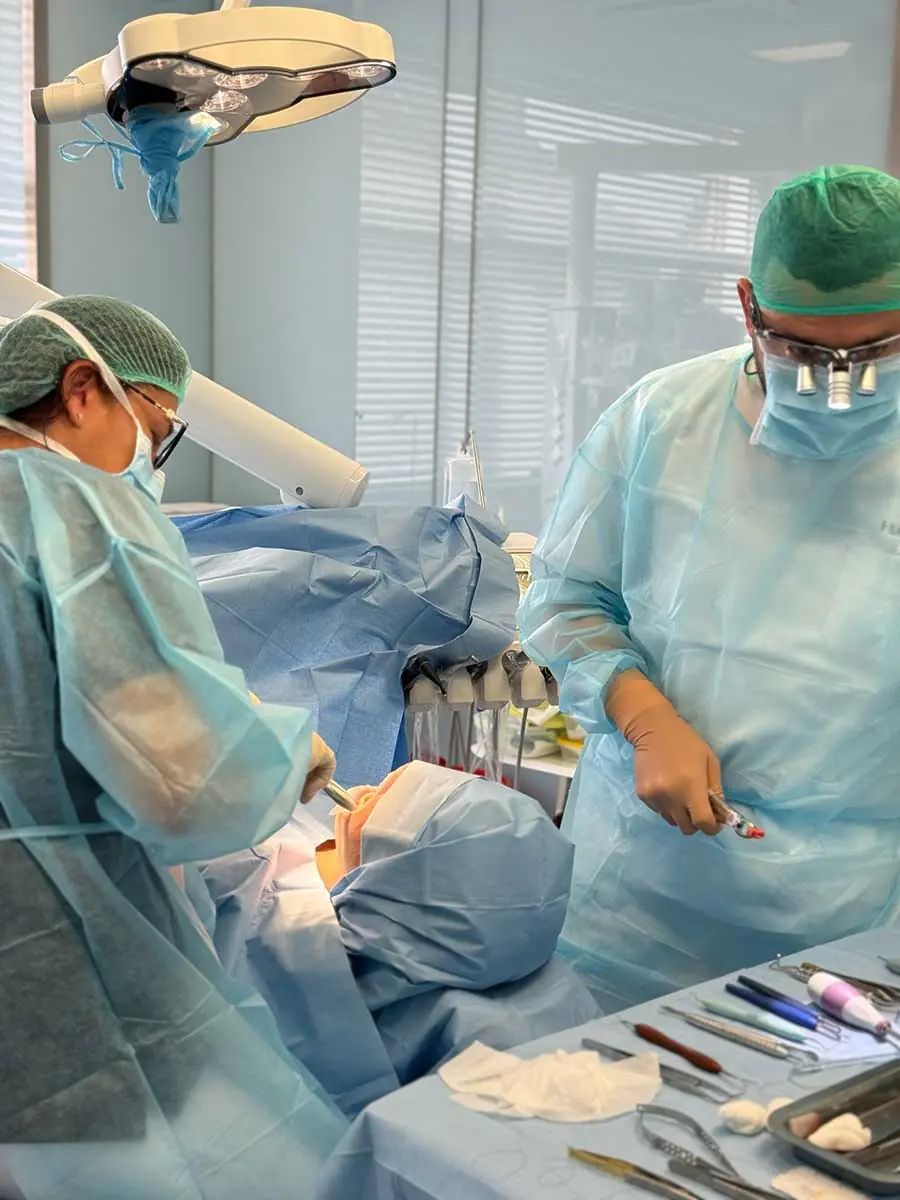
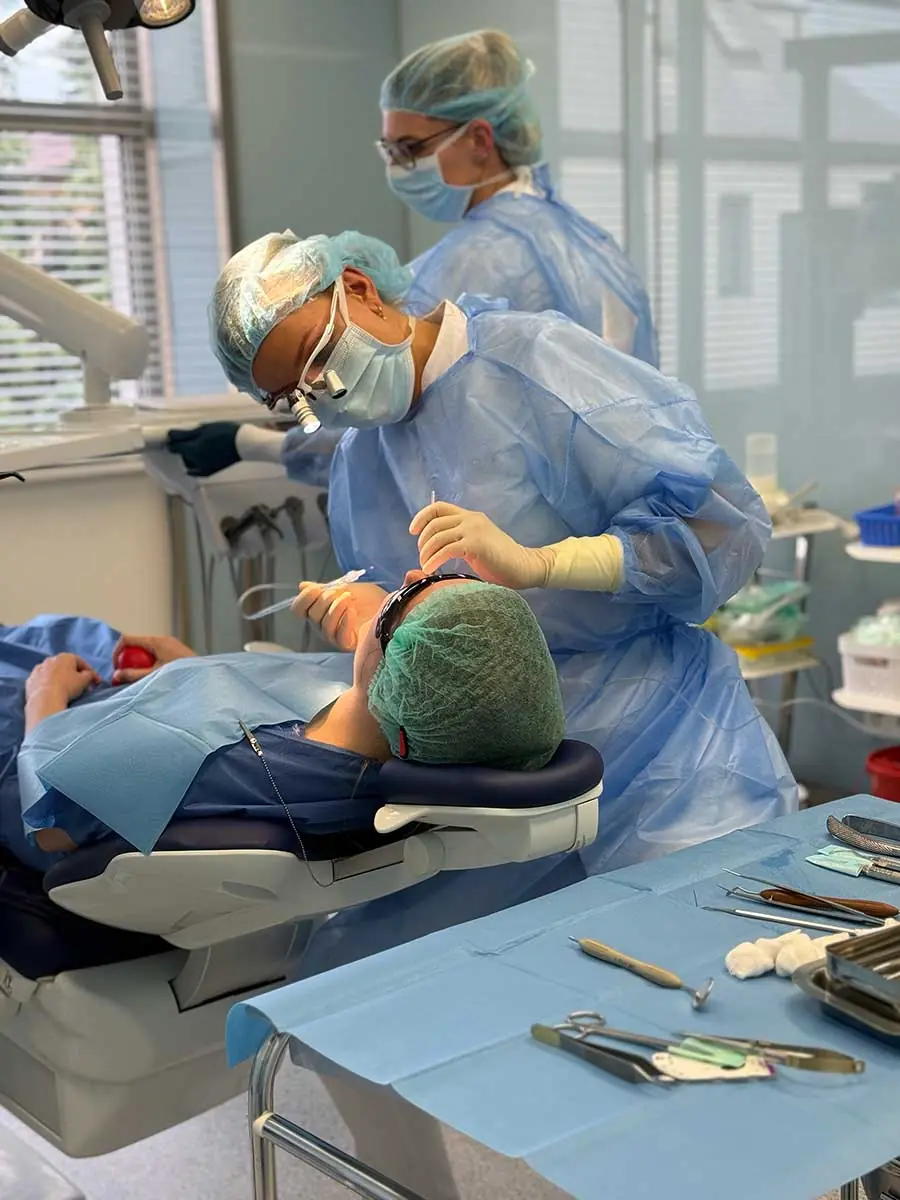
Implant procedure in the sterile conditions of the treatment room
Surgical procedure under full sterile draping
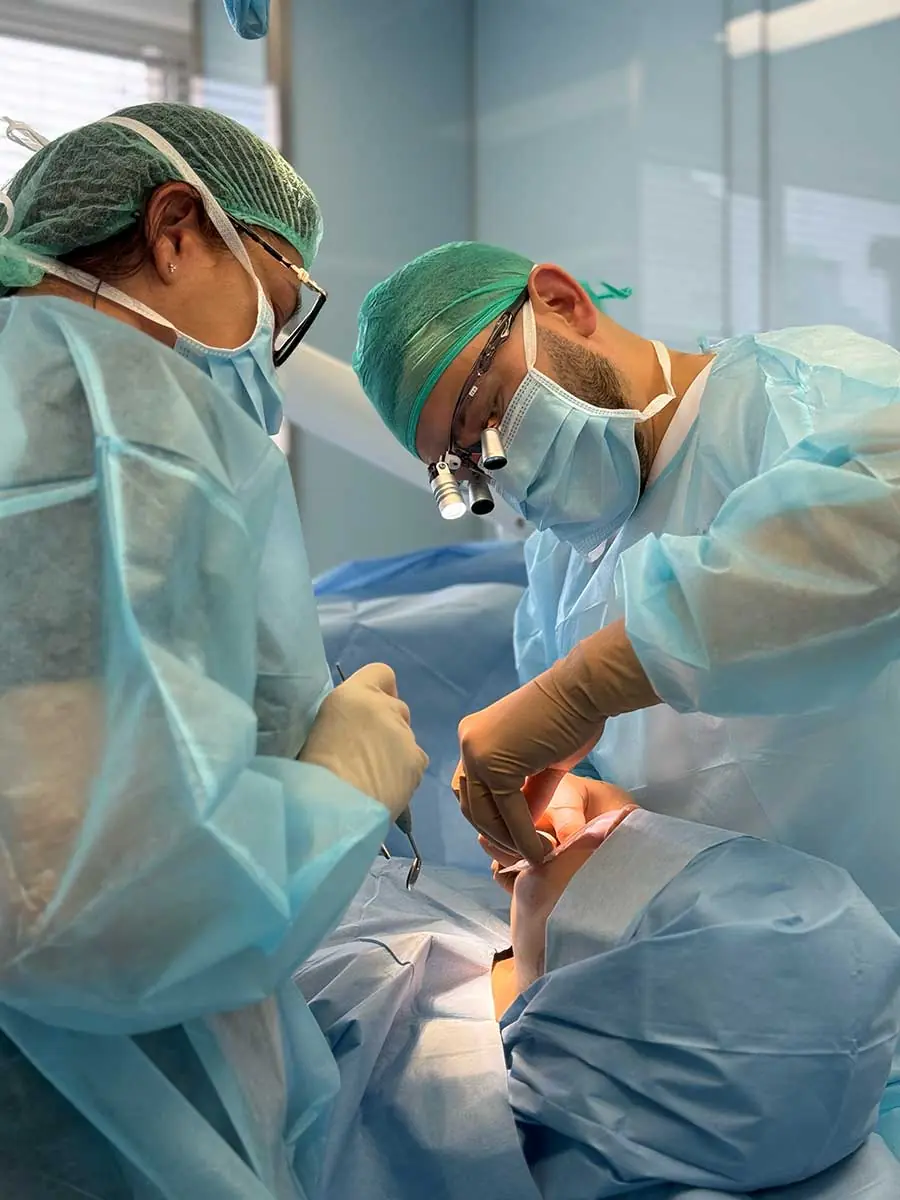
Implant procedure performed by a two-person team
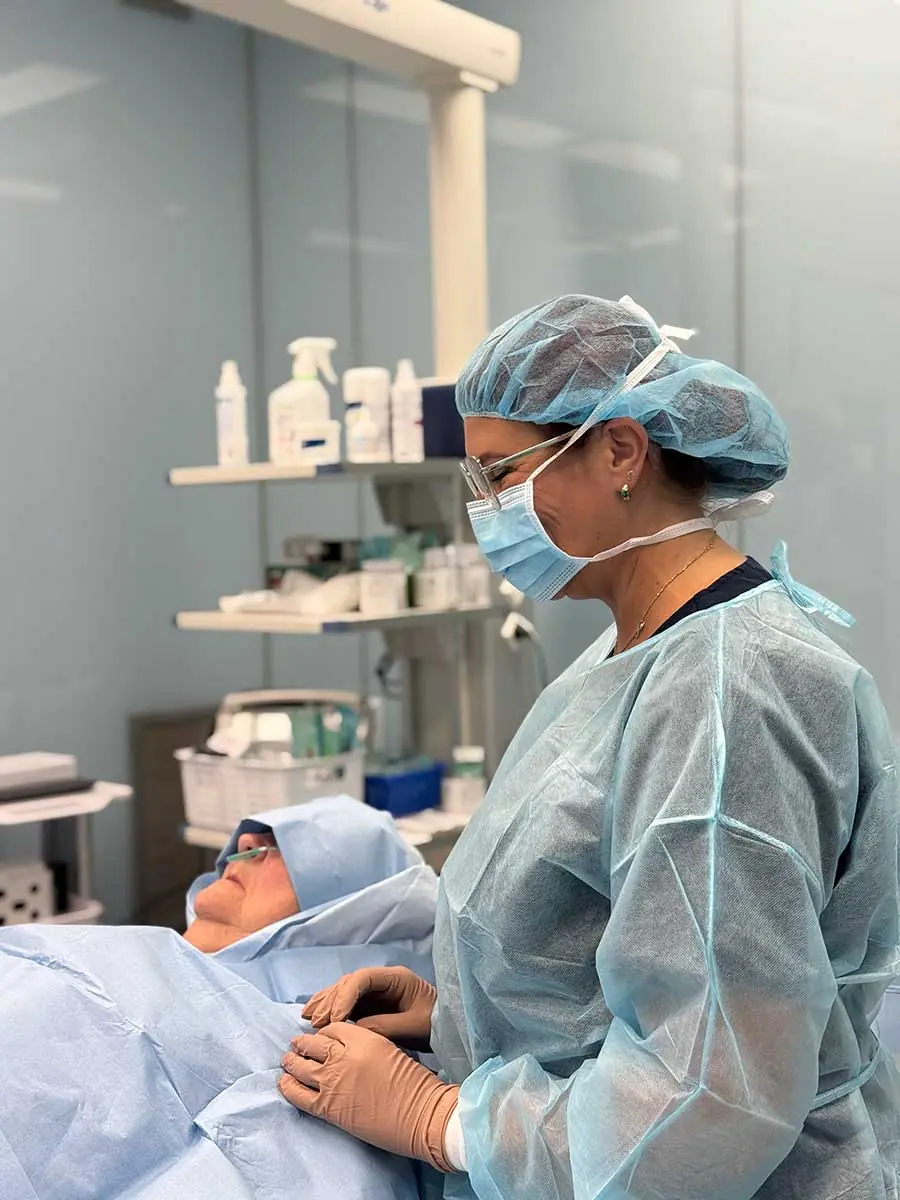
Female dentist attending to a patient prepared for an implant procedure

Next step

No natural teeth left? Let's discuss a treatment plan

A conversation, thorough diagnostics and a treatment plan. No rush, no pressure.