

Damon System
Fixed braces without visible elastic ties: the archwire is held in the brackets by a sliding clip. They often make it possible to avoid tooth extractions, shorten the treatment and reduce the number of check-up visits.
Orthodontics · Solutions
Many years of experience and our own orthodontic laboratory allow us to prepare braces matched precisely to the needs of each patient.
Our own laboratory
Many years of experience in treating malocclusions and our own orthodontic laboratory allow us to prepare braces matched precisely to the dental needs of each patient. This means the expected results of treatment are achieved relatively quickly.
We use solutions proven around the world. We were among the first dentists in Poland to start using some of them, for example orthodontic implants. We describe which malocclusions we treat in the section on malocclusions.
Treatment methods
Fixed braces without visible elastic ties: the archwire is held in the brackets by a sliding clip. They often make it possible to avoid tooth extractions, shorten the treatment and reduce the number of check-up visits.
Completely invisible: the brackets are placed on the inner side of the teeth. This specialised treatment is offered by only some clinics. Lingual braces are particularly recommended for adults whose work often puts them in the public eye.
Tooth-coloured brackets, made of glass or porcelain. Inspire brackets, made of sapphire crystals, are translucent and have therefore become one of the most popular choices in aesthetic orthodontics.
Classic, standard fixed braces: a proven solution in the treatment of a wide range of malocclusions.
Almost invisible, removable, individually designed aligners. Each one is worn for 7-14 days and then replaced with the next one in the series, so the teeth move gradually, step by step, to the planned position. We also use them in children with mixed dentition, supporting the proper development of the bite.
They make it possible to treat very complex malocclusions (recommended for adult patients) and shorten the treatment time as much as possible.
Used when large gaps need to be corrected, whether left by tooth extraction or caused by missing permanent tooth buds.
Used to widen the dental arches of the upper and lower jaw.
Removable appliances that patients put in and take out themselves; used mainly in children and teenagers. Their drawback is the lack of control over how long they are actually worn, and therefore over how effective they are.
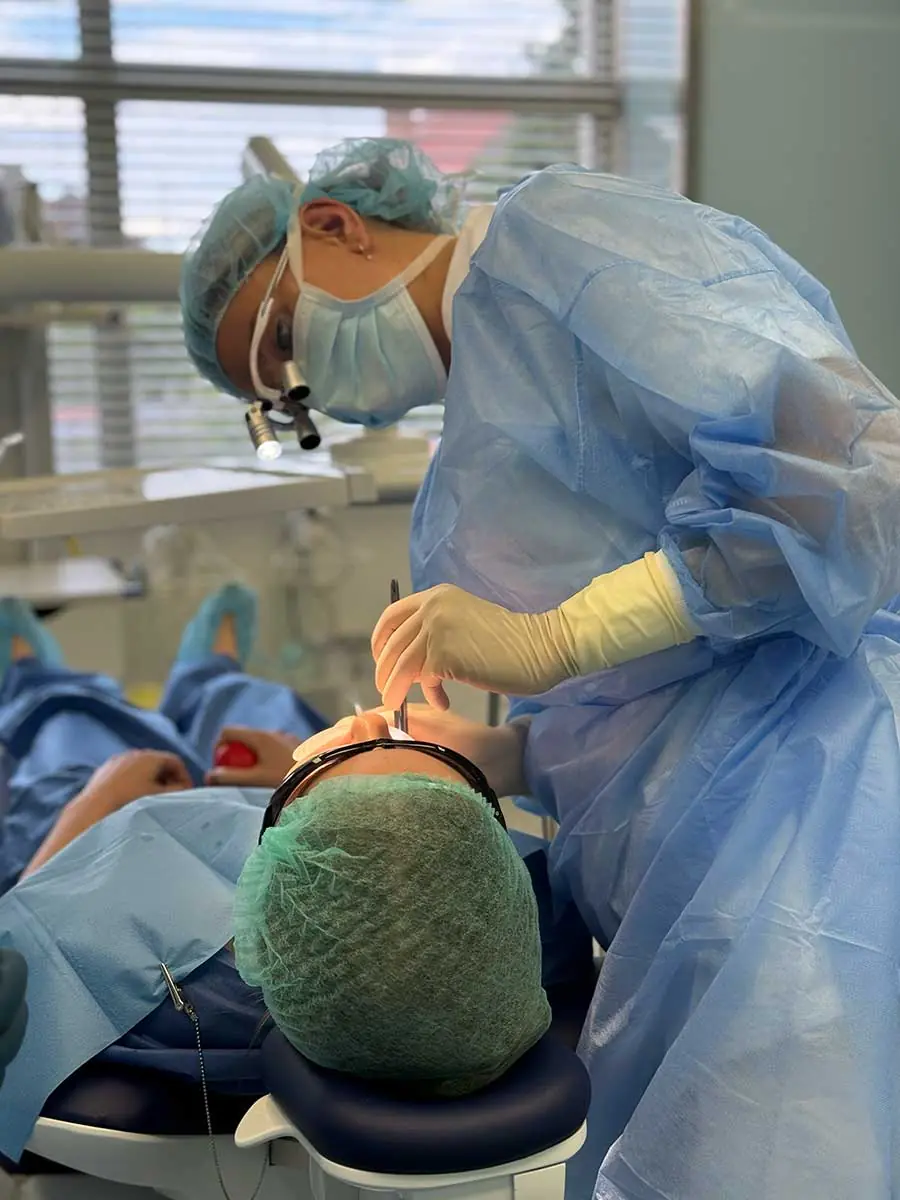
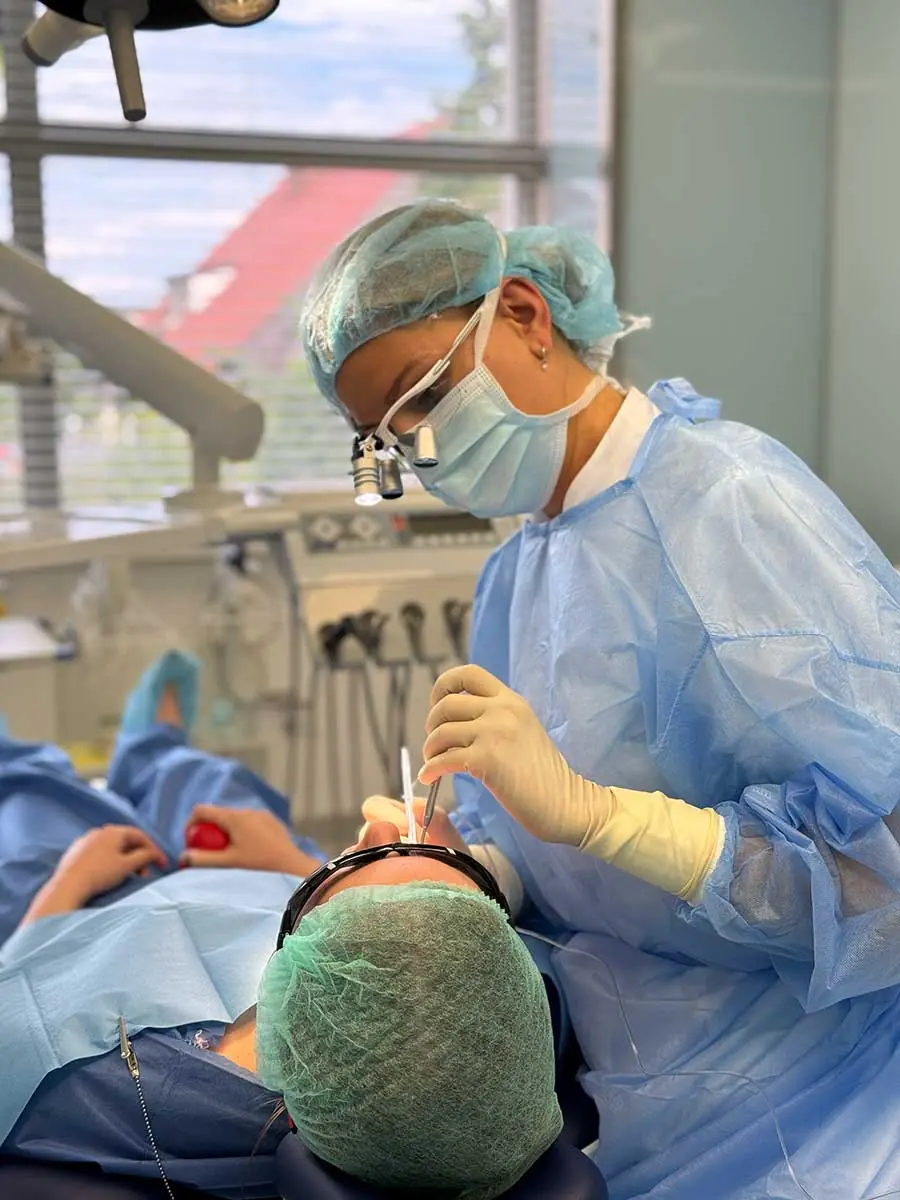
Minor procedures (e.g. exposing impacted teeth) make it possible to change the position of the teeth, speed up the treatment and, in some cases, make treatment possible in the first place.
The course of treatment
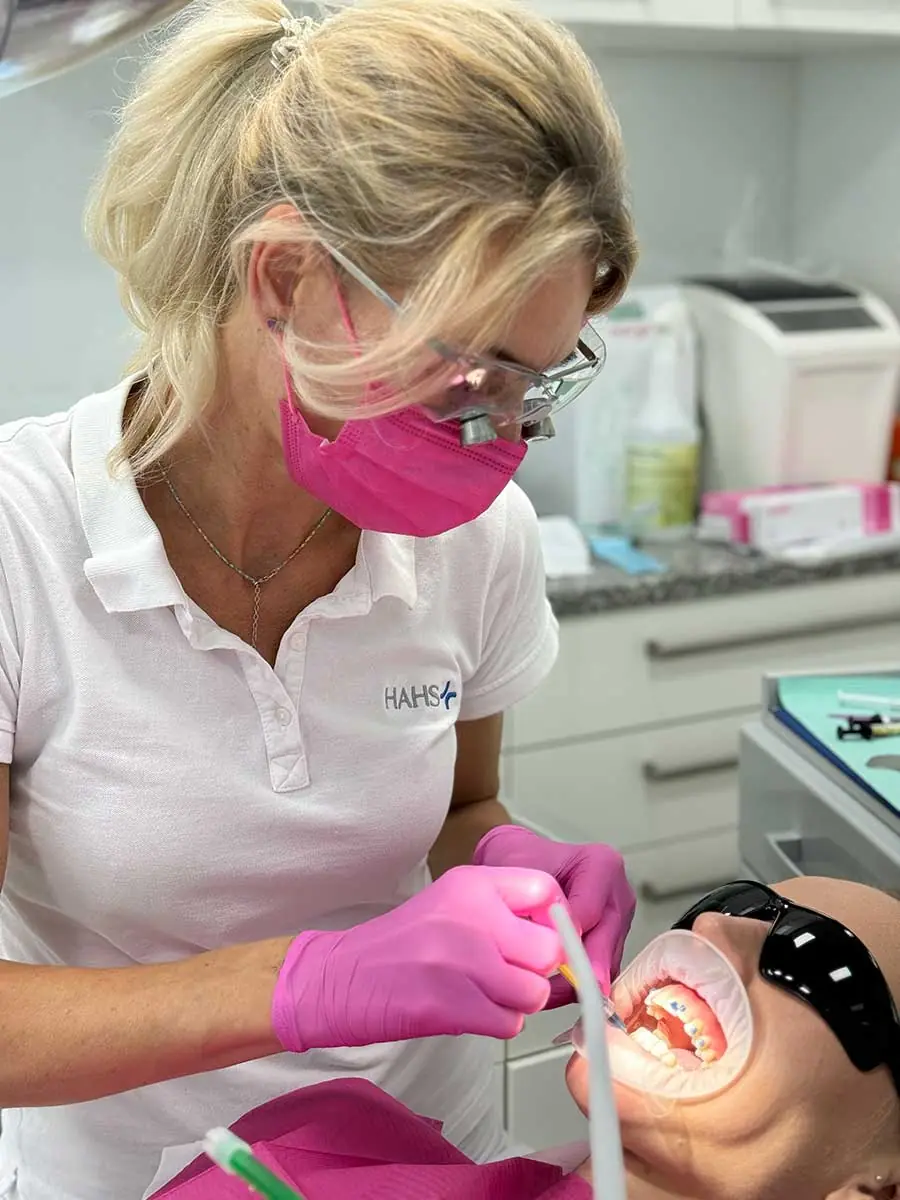
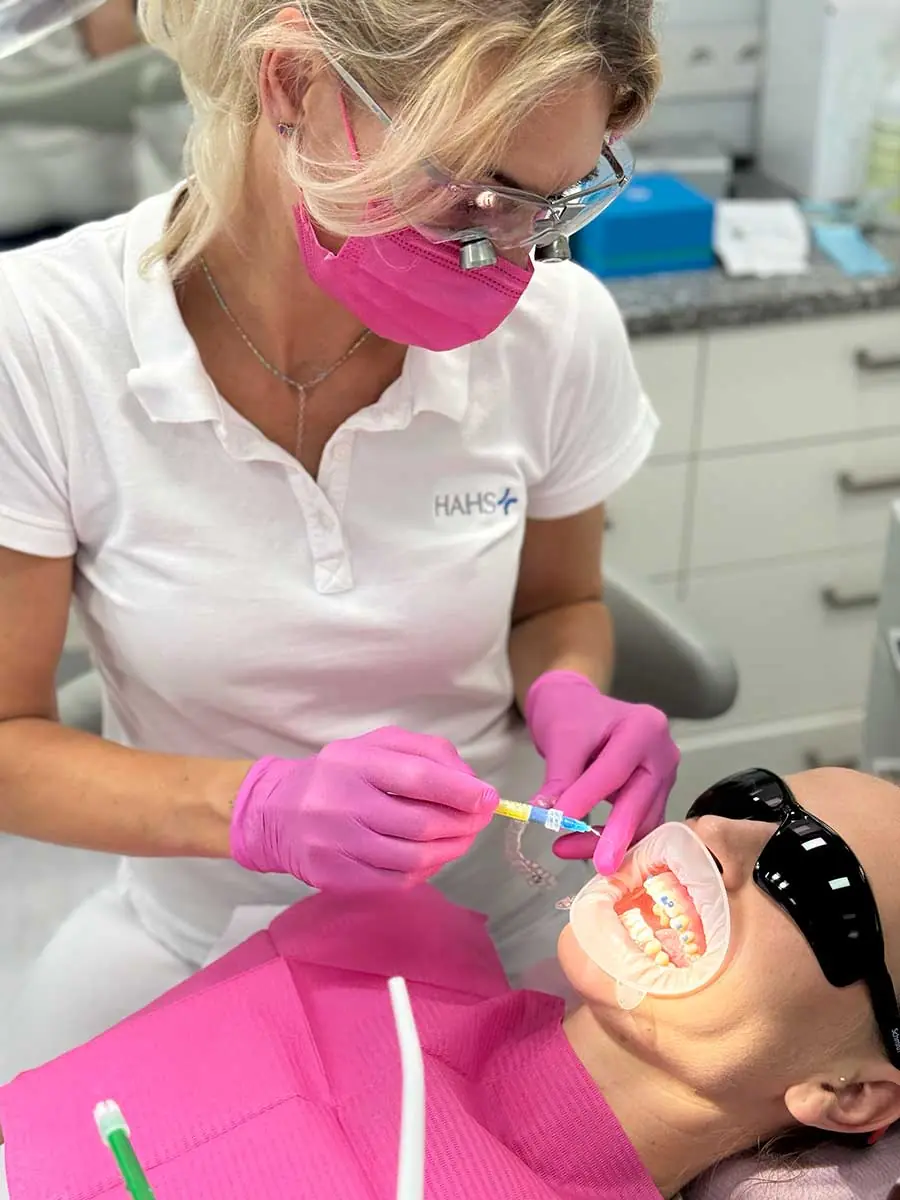
During the first visit the orthodontist carries out detailed diagnostics, takes digital scans of both dental arches and orders the necessary radiological examinations. On this basis they take measurements of the teeth, carry out calculations and simulations, assess the occlusal conditions, choose the appropriate braces and prepare an individual treatment plan.
Successful treatment requires regular check-ups. With fixed braces they usually take place every 4-8 weeks, with Invisalign aligners every 8-12 weeks. The dentist assesses progress, adjusts the force exerted by the braces and provides the next stages of treatment. Without regular check-ups the braces could deepen an existing malocclusion or cause a new one.
The treatment ends with the retention phase, which stabilises the correct position of the teeth. In children and teenagers it should last at least as long as the treatment with fixed braces; in adults this time depends on the severity of the malocclusion.
Depending on the malocclusion, the total treatment time is about 1.5 years in children and about 2 years in adults. To arrange a first visit, please contact the clinic.
Orthodontic treatment is painless, except in cases where one or several teeth have to be removed. Immediately after the braces are fitted, some people feel slight discomfort, which usually subsides within a week. The teeth may seem a little “loose”, which is a normal effect of the braces working. Similar, milder discomfort appears after each adjustment and can be eased with over-the-counter painkillers.
The results of properly conducted treatment cannot be overstated: the patient regains not only a beautiful smile but also their health.
Next step
A conversation, thorough diagnostics and a treatment plan. No rush, no pressure.