
We successfully treat the most complex malocclusions
Orthodontics in Szczecin
Orthodontics for patients of all ages. We restore the aesthetics of your smile and the proper function of the masticatory system, also with invisible Invisalign aligners.
About the treatment
It affects function, not just aesthetics
The main reason patients undertake orthodontic treatment is to restore an aesthetic appearance and the proper function of the masticatory system. Orthodontic braces can improve the facial profile and correct the position of the lips and chin.
Treatment can be started at any age, even at the age of 90. The only limitation is the health of the teeth and gums.
For many years we have specialised in treating malocclusions with fixed and removable braces and with orthodontic implants. You can read about our orthodontic solutions, including the invisible Invisalign aligners, as well as a description of the most common malocclusions.
The consequences of neglect
An untreated malocclusion is not just a matter of aesthetics
Untreated malocclusions can lead to disorders of the temporomandibular joint (the first symptom may be clicking when you open your mouth). They also encourage periodontal disease and tooth decay, the latter because they make thorough brushing more difficult. As a result, they can contribute to tooth loss.
Causes
Where malocclusions come from
Some malocclusions are congenital, but in about 80% of cases they are acquired and develop in the first years of life. They arise under the influence of habits and factors that are easy to overlook in everyday life.
- →Vitamin deficiencies (e.g. vitamin D)
- →Incorrect positioning and feeding of infants
- →Mouth breathing: enlarged adenoids, allergies, inflammation
- →Incorrect swallowing and speech patterns
- →Sucking habits: fingers, lips, objects
- →Injuries
80%
The most common cause
Most acquired malocclusions are caused by tooth decay, especially of the baby teeth.
It can result in the premature loss of baby teeth, which causes bite disorders, inhibits the growth of the jaw bone and impairs the development of the permanent tooth buds.
The changeover to permanent teeth is accelerated or delayed, and the order of eruption is disturbed: permanent teeth can be crowded, displaced outside the dental arch or rotated around their own axis.
Stages of treatment
How orthodontic treatment works
-
I
Diagnostic visit
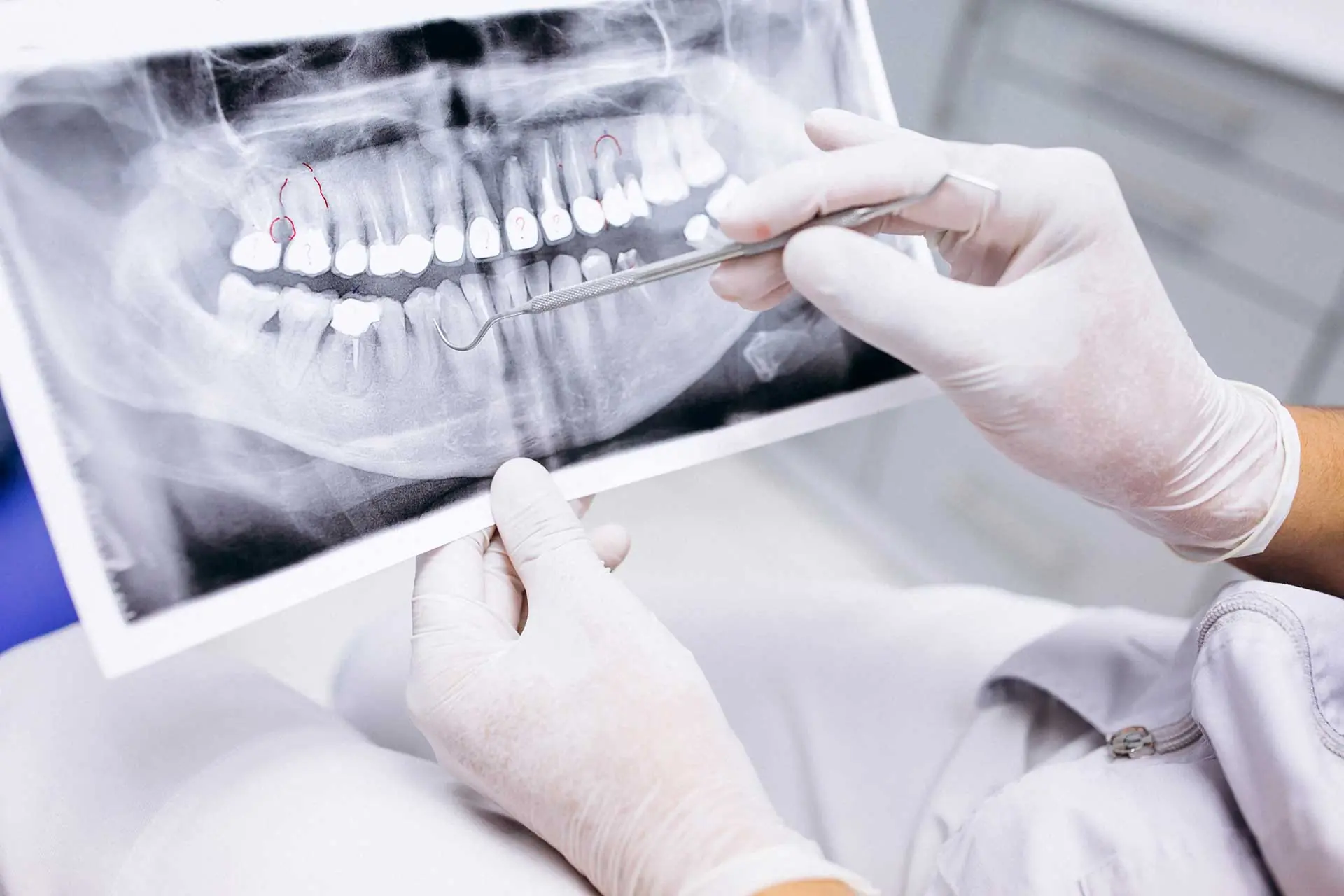
The orthodontist takes impressions of the teeth of both jaws, and the necessary x-rays are taken. On this basis they measure the teeth, carry out calculations and simulations, choose the appropriate braces and plan the treatment so that it brings the expected result as quickly as possible.
-
II
Regular check-ups
During check-up visits the orthodontist assesses progress and adjusts the force with which the braces act on the teeth. Without regular check-ups the braces could have the opposite of the expected effect, for example deepening an existing malocclusion or causing a new one.
-
III
Retention treatment
It completes the therapy and stabilises the correct position of the teeth. In children and teenagers it should last at least as long as the treatment with fixed braces; in adults the length depends on the severity of the malocclusion.
Orthodontic treatment is painless, except in cases where one or several teeth have to be extracted. We describe the details of the braces and the length of treatment in the section on orthodontic solutions. To arrange a first visit, please contact the clinic.
Topics
Areas of orthodontics
Next step
Book a consultation - we will plan your first visit with care.
A conversation, thorough diagnostics and a treatment plan. No rush, no pressure.